Why You Keep Scrolling Even When You’re Exhausted
You’re tired.
The videos aren’t even that interesting anymore.
You know you’ll regret it tomorrow.
But you keep scrolling.
Why?
It may not be a willpower problem.
You spent the entire day doing what you had to do—and now you’re supposed to just go to sleep?
Work. Errands. Chores. Emails. Other people’s needs.
By the time everything is done, it’s already late.
And somewhere in your head:
“Wait. That’s it? That was my whole day?”
So you stay up a little longer.
You sacrifice some sleep just to get a little time that finally feels like yours.
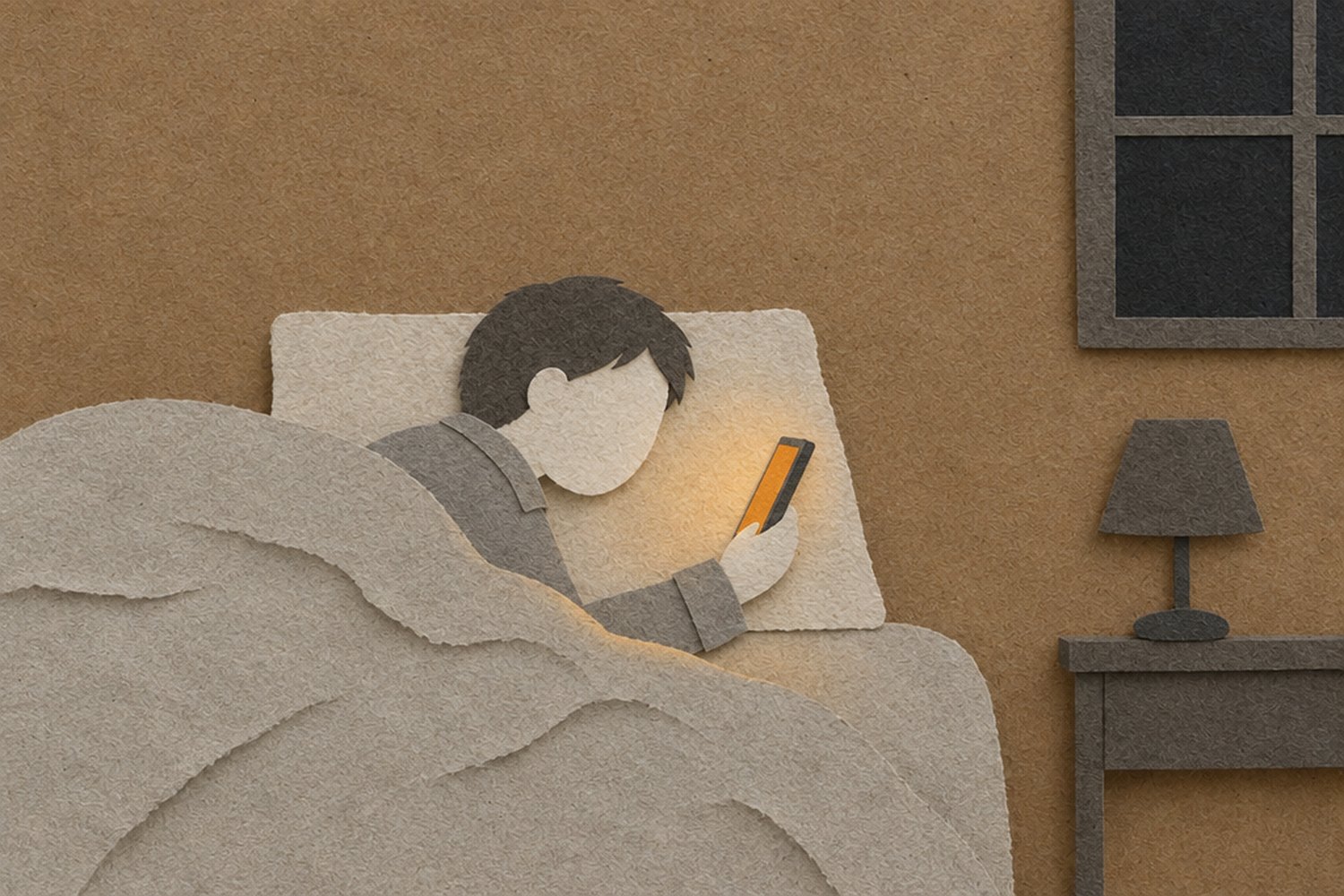
Bedtime procrastination has a name—and a reason
Staying up later than you meant to, with nothing actually keeping you awake, is called bedtime procrastination—sometimes “revenge bedtime procrastination.” It usually means giving up sleep to claim the personal time a busy day didn’t leave you.
There’s actually a name for this pattern: bedtime procrastination. You may have also heard the popular term “revenge bedtime procrastination.”
Dutch researchers first named it in 2014. In a 2019 study that interviewed 17 people who often go to bed late, some said they stayed up on purpose because they felt they deserved some time for themselves.
But that raises another question.
If this time is so precious, why spend it scrolling?
When you stay up late to get some personal time after a busy day, that time often goes to scrolling: by the time it arrives, you’re already exhausted and haven’t planned anything for it, so you grab the easiest thing within reach—your phone.
Was watching 50 more TikToks really what you wanted to do tonight?
Probably not.
But by the time you finally get some free time, you’re exhausted.
It’s late.
You haven’t decided what else to do.
Starting something feels like work.
Your phone, meanwhile, requires nothing.
Open it.
Scroll.
Watch one video.
Then another.
Suddenly an hour is gone.

And when you finally put the phone down, something still feels unfinished.
You gave up sleep to get some time for yourself—
but you didn’t really get what you wanted from that time.
And now you’re short on sleep too.
So should you just stop using your phone at night?
Not necessarily.
Some nights, scrolling is perfectly fine
Scrolling at night is fine—no need to feel guilty about it—on days that already gave you some enjoyment or rest, like fun or time with people you love, and also included something that pays off later, like exercise or learning. On those days you’ve already taken care of both today’s you and tomorrow’s you, and not every minute needs to be productive.
Try looking at your day in two ways.
First: Did today give you something you needed?
Maybe you laughed a lot.
Spent time with someone you love.
Played a game.
Relaxed.
Did absolutely nothing for a while.
That counts.
It gave something back to you today.
Now ask a second question:
Did you do anything today that your future self gets to keep?
Maybe you exercised.
Learned something.
Worked on something you’re building.
Practiced a skill.
Made a little progress on something you’ve been putting off.
That counts too.
It gave something to you tomorrow.
And if your day already had some of both?
Go ahead. Scroll for a while.
Not every minute of your life needs to be productive.
The problem is a different kind of day.
The days when everything was just something you “had to do” feel different
Compared with days that included some fun or some progress on things you care about, days filled only with obligations make it harder to put the phone down and go to bed. Before reaching for the phone, ask what the day was actually missing: fun, rest, time alone, or something you’ve wanted to work on. If what was missing was fun, scrolling may really be what you need.
Work.
Chores.
Responsibilities.
Other people’s requests.
Then suddenly it’s bedtime.
You didn’t get much enjoyment today.
And you didn’t do much that felt like it was building toward something you care about either.
Those are the nights that can feel hardest to end.
But that doesn’t mean the answer is always “be productive.”
Ask what was actually missing.
Was your day painfully boring?
Maybe gaming or scrolling really is what you need.
Were you around people all day?
Maybe you need an hour where nobody needs anything from you.
Have you been wanting to work out, draw, learn guitar, write, build something, or start a project—but never seem to get to it?
Maybe that’s what you’re actually looking for tonight.
The important question isn’t:
“Should I be on my phone?”
It’s:
“Is my phone actually giving me what I need right now?”
There’s just one problem.
11:30 p.m. is a terrible time to figure out what your evening needs
Trying to decide what your night needs at 11:30 p.m., when you’re already tired, usually ends with the easiest option: your phone. It works better to decide earlier in the day—pick one thing you’ve been wanting to do regularly, like exercise or guitar, and how much time you’ll give it.
You’re already tired.
Your brain doesn’t want to design a better life.
It wants the easiest available option.
And the easiest option is sitting in your hand.
So decide earlier.
Pick one thing you actually want to keep doing.
Then give it a small piece of your day.
30 minutes at the gym.
20 minutes with your guitar.
30 minutes drawing.
40 minutes building that thing you keep talking about.
It doesn’t need to be impressive.
But there’s one more thing you need to schedule.
Sleep.
Exercise builds something for your future self.
Learning does too.
So does making something.
But sleep is also something your future self gets to keep.
Tomorrow’s energy, focus, and patience depend on it.
So your evening plan can be surprisingly simple:
Something I want to do
How much time I’ll give it
When I’m going to bed
That’s it.
And once you’ve done what mattered to you?
Scroll if you want to.
Enjoy something if you need enjoyment.
Make progress if you want something to carry into tomorrow.
And get enough sleep to actually have a tomorrow worth showing up for.
The goal isn’t to quit your phone.
It’s to stop letting your phone decide what happens to the only time that belongs to you.
If you’re scrolling tonight, open your Notes app for a minute.
Write three lines:
Something I want to do:
Time I’ll give it:
Bedtime:
It looks small.
But an evening where you give something to yourself today, leave something for yourself tomorrow, and still get enough sleep—
is a very different evening.
And enough of those evenings can eventually make a very different life.
There’s one small skill underneath all of this:
noticing what you’re doing while you’re doing it.
Noticing that you’ve been scrolling without really choosing to is surprisingly similar to mindfulness meditation: you notice that your mind has wandered, then gently bring your attention back to your breath.
True Meditation is a mindfulness app designed to help you practice exactly that simple process.
Tonight, before bed, maybe give yourself five minutes to just sit, breathe, and notice.
In short
Scrolling late into the night when you’re exhausted is often bedtime procrastination, also called revenge bedtime procrastination: after a day spent only on obligations, people delay sleep to get some time that feels like their own. That late-night time usually goes to the phone because by then people are tired and haven’t planned what else to do with it. Scrolling at night is fine on days that already brought some enjoyment or rest and included something that pays off later, like exercise or learning; on days made only of obligations, it helps to first ask what the day was missing. Before the evening starts, decide three things—something you want to do, how long you’ll spend on it, and when you’ll go to bed—so that you, not your phone, choose how that time is used.
True Meditation isn’t an app you listen to. It’s an app for doing mindfulness meditation yourself — practice in noticing your own thoughts, built into an app. It’s free on the App Store and Google Play.
Related reading
- You Rested Your Whole Lunch Break. Why Are You More Tired? — why a break spent scrolling can leave you more tired
- You Beat Yourself Up for Procrastinating. Why Put It Off Again the Next Day? — what you’re avoiding when you put things off, and how to set a moment to start