Anxious for No Reason? How to Get Out of Your Head
Some days nothing is actually wrong, and you're anxious anyway — worrying about things that haven't happened yet.
What if the presentation bombs next week? Why haven't they texted back? Am I going to make it through this month? Nobody plans these thoughts. They just show up. And each worry pulls the next one in behind it, until you're three worries deep.
The way out of an anxious thought is to notice it
When you're anxious for no clear reason, the way out of the thought is to notice it: oh — I'm having an anxious thought right now. Not getting rid of the thought. Just noticing that you're caught up in it.
Trying to force an anxious thought away tends to make it bigger, because now there's a second thought stacked on top of it — I need to stop thinking this. Noticing works differently. It opens a small gap between you and the thought. The thought can still be there, but you're no longer inside it.
While you're caught up in a thought, it doesn't occur to you to notice it
While you're caught up in an anxious thought, the idea I should notice this simply doesn't come up. From inside a thought, you can't see that it's a thought. You just go around in circles.
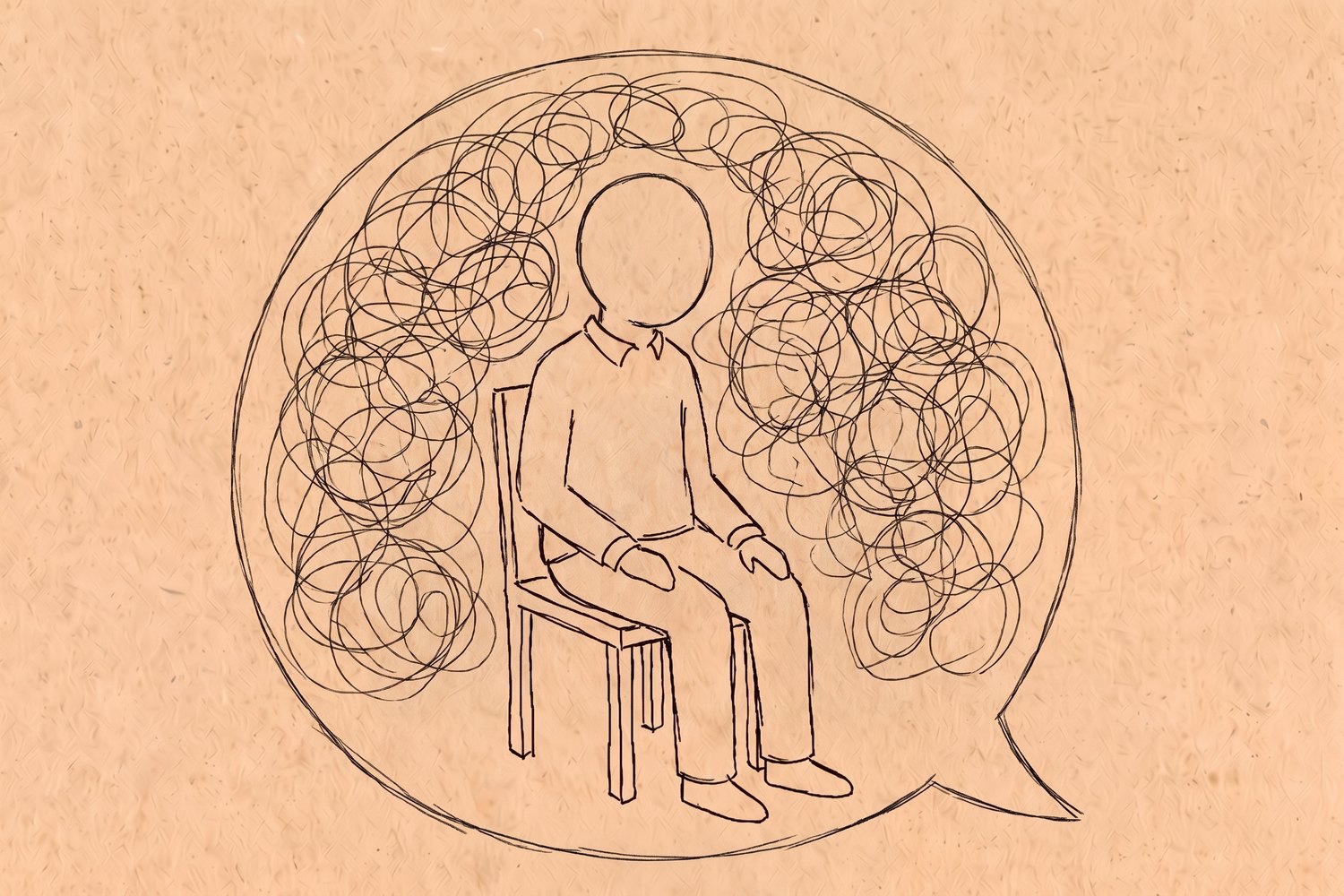
Knowing the technique doesn't help much on its own, and this is why. The knowledge only shows up after you've already snapped out of it. In the moment you actually need it, it just isn't there.
Noticing is a skill you train, not something you know
The ability to notice your own thoughts doesn't come from understanding it. It comes from practice, a little at a time. The more you practice, the more easily you catch thoughts as they come up.
As the skill grows, you start noticing anxiety the moment it rises, before you've sunk into it. For people who've lived with a lot of worry, building this one skill can make a real difference.
Mindfulness meditation is how you train exactly this skill. You count your breaths, your mind wanders, you notice, and you come back to the number you were on. Each time you come back is one rep.
Another problem: to train the skill of noticing, you already need the skill of noticing
Mindfulness meditation has a chicken-and-egg problem. You meditate to build the skill of noticing — but to notice that your mind has wandered in the middle of a session, you already need that skill.
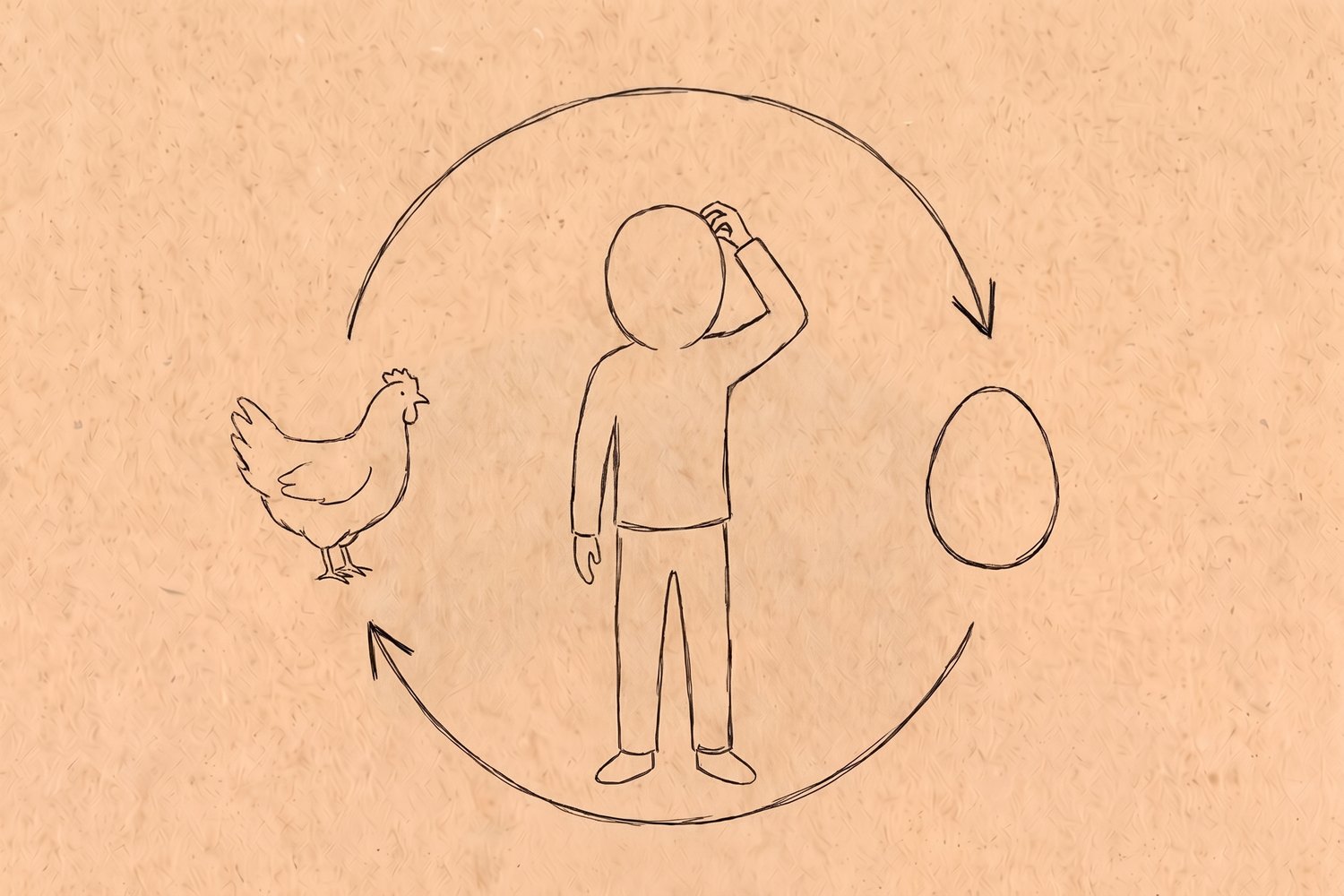
So when you're starting out, it's common to meditate for ten minutes and spend eight of them lost in thought. You can't tell you've wandered while it's happening, so you only find out when the session ends. This is where a lot of people decide meditation just isn't for them.
I built an app to get around this. With each breath, you count silently, double-tap the screen, then take the breath. If your mind wanders and the rhythm of your taps breaks, your phone gives a small buzz right then. You won't lose eight minutes without knowing it. Noticing and coming back is still up to you.
In short
When you're anxious for no clear reason, the way out of the thought isn't getting rid of it — it's noticing that you're having it. While you're caught up in a thought, though, the idea of noticing doesn't occur to you, so knowing the technique isn't enough. Noticing your thoughts is a skill built through practice, and mindfulness meditation is that practice. The hardest part for beginners is catching the moment their mind wanders with no outside cue.
True Meditation isn't an app you listen to. It's an app for doing mindfulness meditation yourself — practice in noticing your own thoughts, built into an app. It's free on the App Store and Google Play.