How to Distance Yourself From Your Thoughts — and What It Actually Does
A lot of people search for how to stop thinking, or how to stop ruminating. What psychologists have looked at for years, though, isn't stopping thoughts. It's stepping back from them. In 2025, a meta-analysis pooled 29 trials with 2,535 participants on this. Let's start with what that distance does.
What changes when you distance yourself from your thoughts
When you put some distance between yourself and your thoughts, the same thought can show up without pulling you along, and you can step out of the loop of replaying the same scene over and over. Distancing yourself from a thought means seeing it for what it is — "this is a thought I'm having right now" — from a step back.
Without that distance, you're inside the thought. "Why did I send that email like that?" comes up, the scene starts replaying, and you live through the same moment again. With distance, your position changes. You go from being caught inside the thought to being the one watching it.
Stepping back and noticing your own thinking is what's called metacognition — broadly, the same metacognition you hear about in study tips.
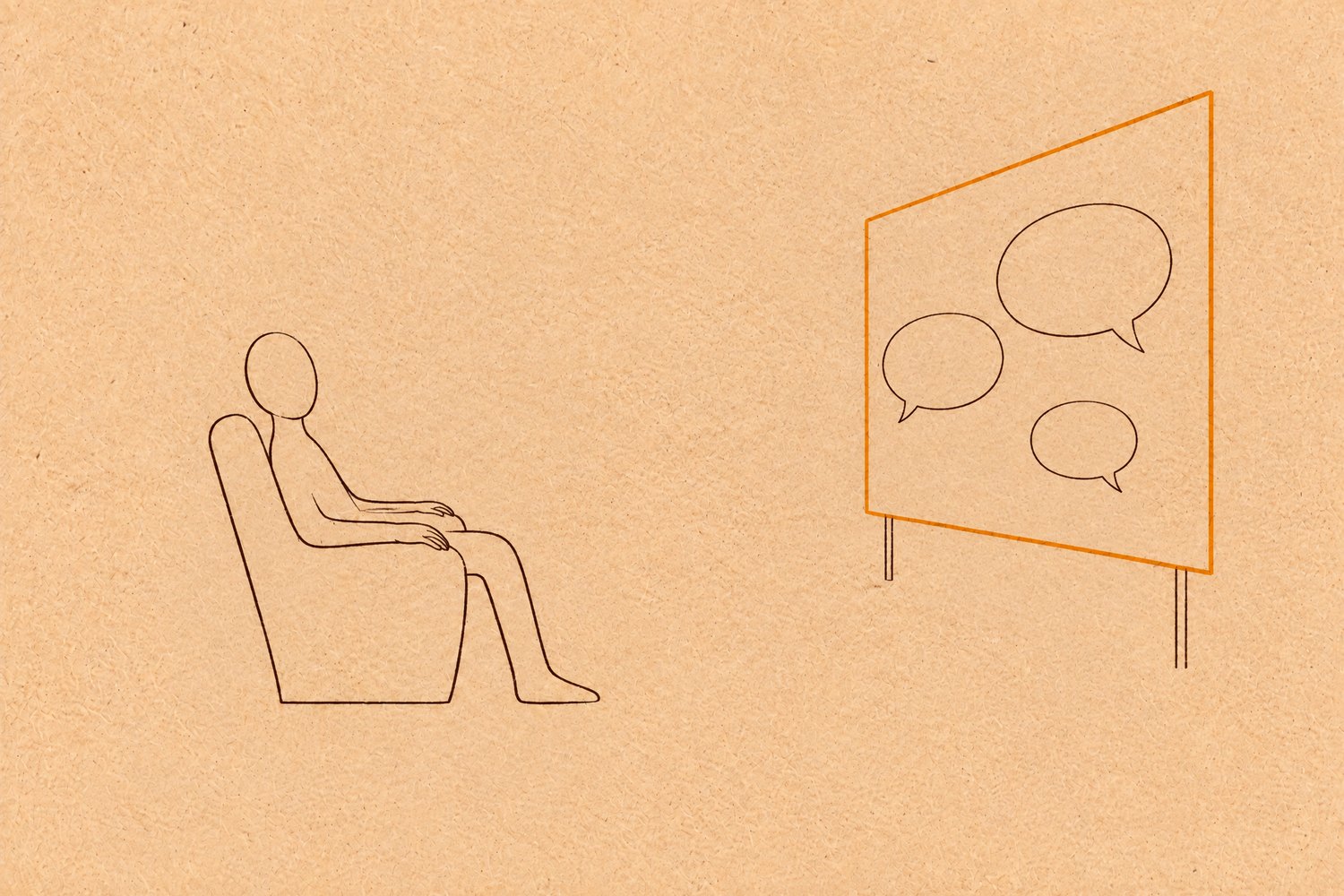
Psychology has a specific name for this kind of distance.
Psychologists call it "decentering"
Decentering means seeing a thought as a passing event in your mind rather than as a fact. When "What's wrong with me?" shows up, you see it as a thought that just appeared, not as a verdict on who you are. The opposite of decentering is rumination — going over the same thought again and again.
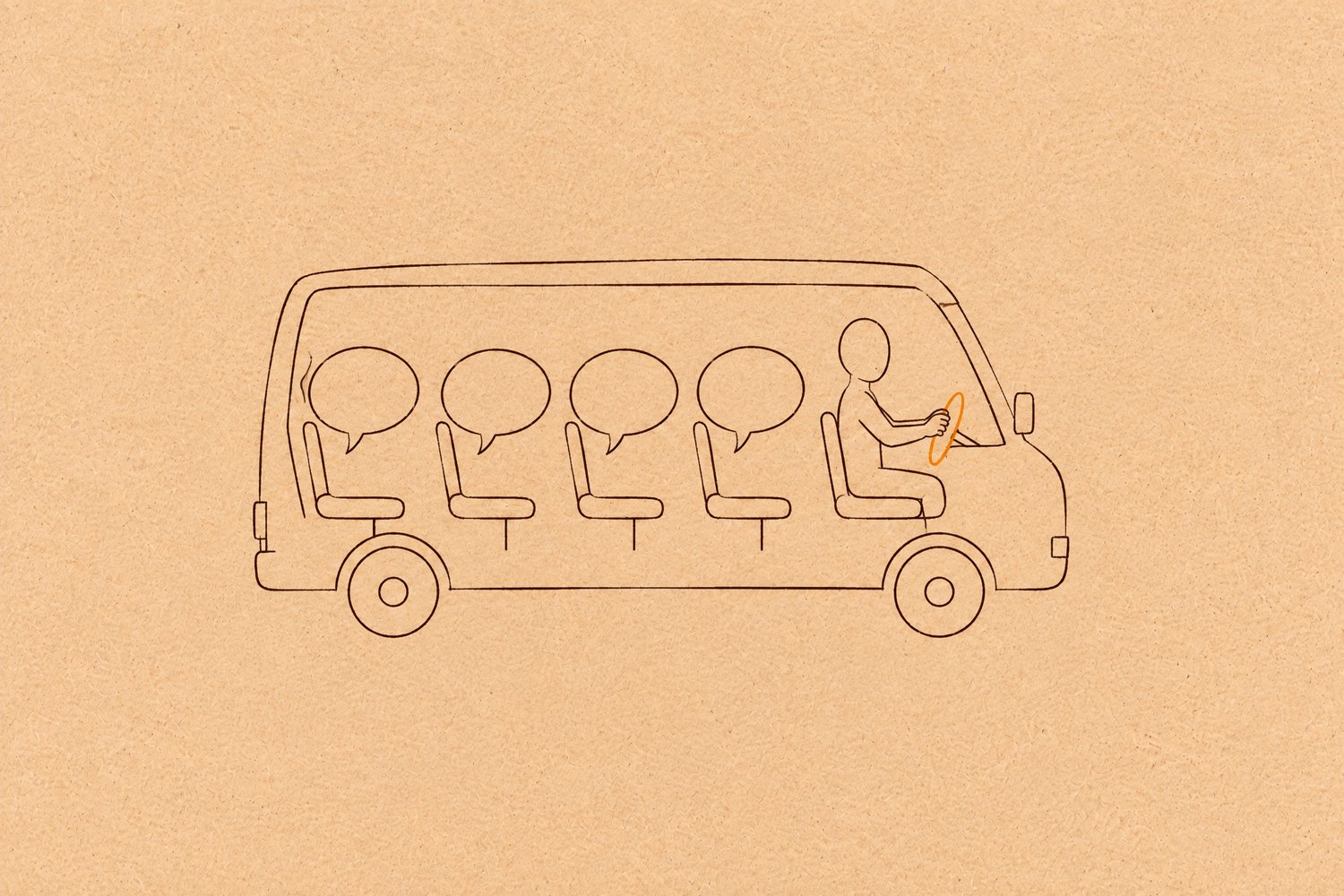
In everyday life, it looks like this:
- On the way home, "I shouldn't have said that" comes up. Instead of replaying the scene again and again, you can think "there's that thought again" and set it down.
- A reply is taking a while and you think, "Are they mad at me?" You can see it's a guess, not a fact.
In both cases, the thought didn't go away.
The thought still shows up. What changes is how you respond.
So how do you build that distance? It isn't the same as telling yourself to stop thinking about it.
How to distance yourself from your thoughts: notice instead of stopping
One well-studied way to build distance from your thoughts is mindfulness meditation. What you do is simple. You rest your attention on the feeling of breathing. Before long, another thought shows up. You notice it and come back to the breath. And you keep doing that.
It isn't practice in stopping thoughts. It's practice in noticing them.
The moment you notice your mind has wandered off during meditation, you've already stepped back. Each time you notice, a little distance opens up between you and the thought, and practice is just collecting those moments. So thoughts showing up often doesn't mean you're failing. Every one of them is another chance to notice.
Does it actually work? Researchers have tested it in eight-week programs built around this practice.
People who practiced mindfulness were better at distancing themselves from their thoughts
A 2025 meta-analysis in the journal BMC Psychology pooled 29 randomized controlled trials of mindfulness-based cognitive therapy (MBCT), with 2,535 participants. Compared with people who didn't do the program, those who did ruminated less, going over the same thoughts less often, and the difference was still there when it was measured again months after the program ended. In the trials that measured the ability to step back from thoughts, the mindfulness groups also scored higher on it. Wei, Qin, Yu, Cao & Li, 2025, BMC Psychology 13:968.
The programs usually ran for eight weeks, centered on mindfulness meditation practice along with ways of working with thoughts. Most of the practice took place in group sessions, in person.
They were less stuck on the same thoughts, and better able to step back from them. Rumination was measured across all 29 trials (effect size SMD −0.51, a moderate effect), with follow-up measurements in 14. The ability to step back from thoughts (decentering) comes from the 5 trials, 586 people, that measured it (SMD 0.62). Most participants were receiving clinical or counseling care, results varied between studies, and the authors note that more research is needed on how these changes happen.
But an eight-week program with weekly in-person sessions isn't easy for everyone. Can you do this on your own?
You can start mindfulness meditation on your own
You don't need a class or a group to start mindfulness meditation. The hardest part when you're alone is noticing that your mind has wandered off. While you're caught up in a thought, you don't even know you're caught up in it.
I built True Meditation, an app that helps you notice the moment your mind wanders off. You tap the screen twice with each breath, and when that rhythm slips — usually a sign your mind has wandered off — a small vibration lets you know.
Practicing on your own with an app isn't the same as an eight-week program. On your own, you start with that single move — noticing and coming back — for a few minutes a day. Keep it up, and the ability to step back from your thoughts can grow, and your metacognition along with it.
Here's what that can look like. It's Sunday evening, you're watching a movie, and Monday's to-do list starts running in your head. Instead of getting pulled along, you notice — "there's Monday again" —
and go back to the movie.
In short
Distancing yourself from your thoughts means stepping back and seeing a thought as "a thought I'm having right now," which psychologists call decentering. With that distance, the same thought can show up without pulling you along, and stepping back to notice your own thinking is what metacognition means.
One well-studied way to build that distance is mindfulness meditation: resting attention on the breath, noticing when another thought shows up, and coming back. In a 2025 BMC Psychology meta-analysis of 29 trials and 2,535 people, those who did a mindfulness program ruminated less than those who didn't, with the difference still there months later, and in the trials that measured it, they were better at stepping back from their thoughts.
True Meditation isn't an app you listen to. It's an app for doing mindfulness meditation yourself — practice in noticing your own thoughts, built into an app. It's free on the App Store and Google Play.
Related reading
- When Your Mind Won't Stop Racing, Emptying It Is the Wrong Move — the difference between emptying your mind and noticing
- Anxious for No Reason? How to Get Out of Your Head — getting out of a thought that keeps feeding itself