Can't Sleep Before a Big Day? How to Come Back From Racing Thoughts
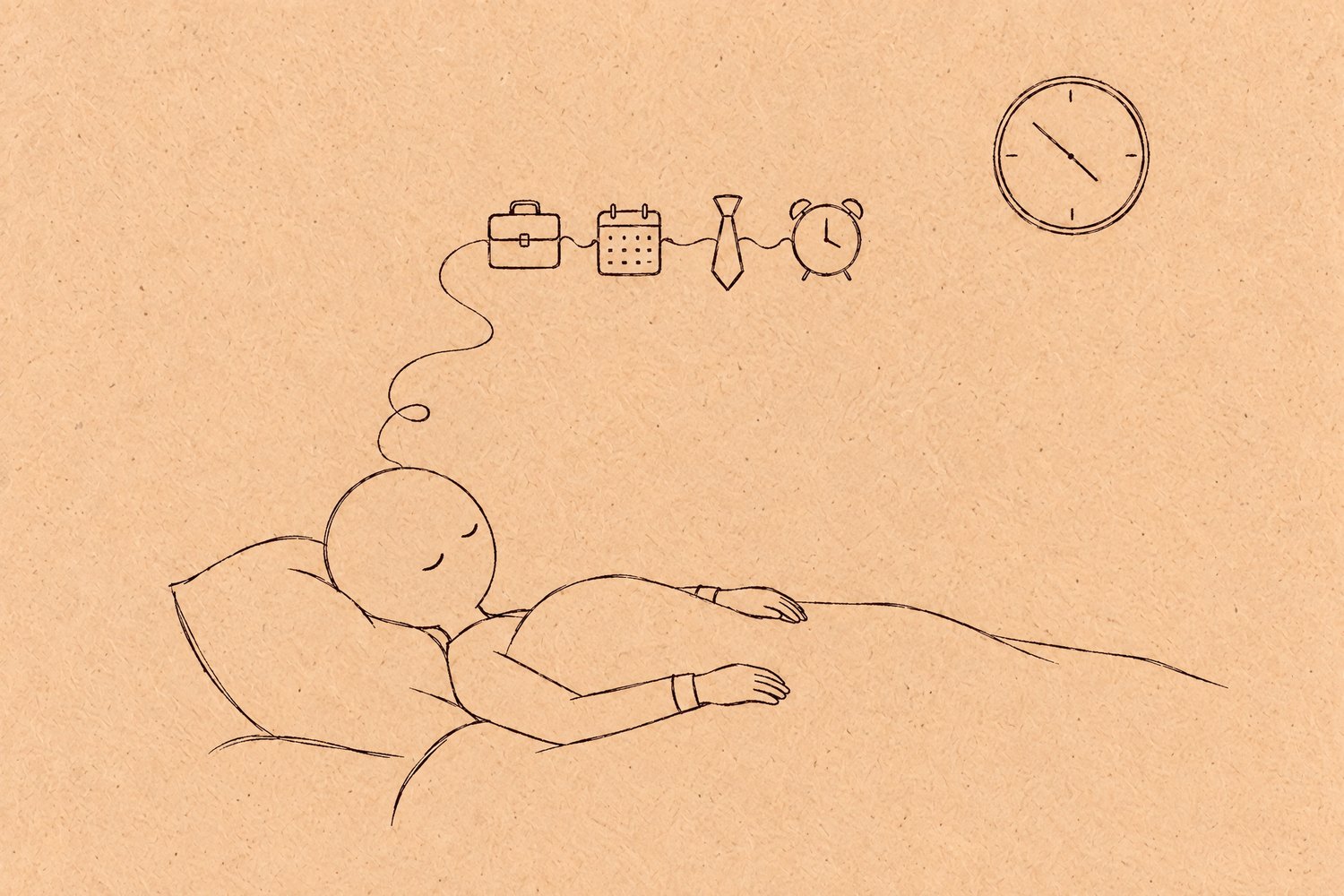
The night before something important, sleep just won't come. Your body is tired, but your mind won't switch off.
Close your eyes and tomorrow starts playing on a loop in your head. You just want it to stop, and it won't.
The harder you tell yourself to fall asleep, the more you check the clock. Now you're also stressed about how late it is and how tired you'll be tomorrow, and your head gets even busier.
When you can't sleep, you can try counting your breaths
There's one thing you can try when sleep won't come: close your eyes, let your whole body soften (especially your neck and shoulders), and breathe while counting.
Silently say "one" as you breathe in slowly, then out. Then "two," and breathe the same way. Then three, four…
Before long, tomorrow's scenarios start playing in your head again. You lose count, and your thoughts drag you along.
After a good while, you suddenly notice: oh. I've been off in my head and I forgot to count. So you come back to the number you were on, pick up from there, and keep breathing. Keep at it for 20 breaths, or 50, and your thoughts may quiet down a little at a time.
The moment you notice you're lost in thought, the thought loses its pull
The moment you notice you're lost in thought, the thought stops pulling you along. You step out of it and you're back in the present.
If you actually try it, you'll find something surprising. From the moment you noticed, even if only for a little while, tomorrow's scenarios weren't pulling you along.
Your mind wanders in the daytime too, not just in bed
Your mind wanders by day as well as by night, and more often than you'd think.
While you're studying, sitting in class, or working, a lot of that time slips by. In class especially, when your mind wanders you lose the thread of the lesson. And you can't count breaths in the middle of a lecture.
It's surprising how often your mind wanders once you start watching for it. (Most of the time, people don't even realize it's happening.) And when you see how much time it costs you in bed, at your desk, in class and at work, that's a second surprise.
There's no way to stop thoughts from arising, so the answer is to notice quickly
There's no way to keep wandering thoughts from coming up. The only answer is this: when your mind has wandered, notice as soon as you can. Even better, notice just as it starts to wander, and go back to what you were doing. Both of these are possible.
But noticing isn't something you learn by reading about it. It takes practice, and that practice is exactly what mindfulness meditation is.
Mindfulness meditation isn't emptying your mind. It's practice in noticing and coming back
Mindfulness meditation isn't about emptying your head. Thoughts keep coming up during meditation too. What you do is one thing: notice that your mind has wandered, and come back to what you were doing.
Counting breaths in bed is already the meditation. You count on from one, and when your mind wanders and you lose track, you don't start over. You come back to the number you were on. Losing track isn't failing. It's a chance to practice. Every time you notice and come back, that counts as one round of practice.
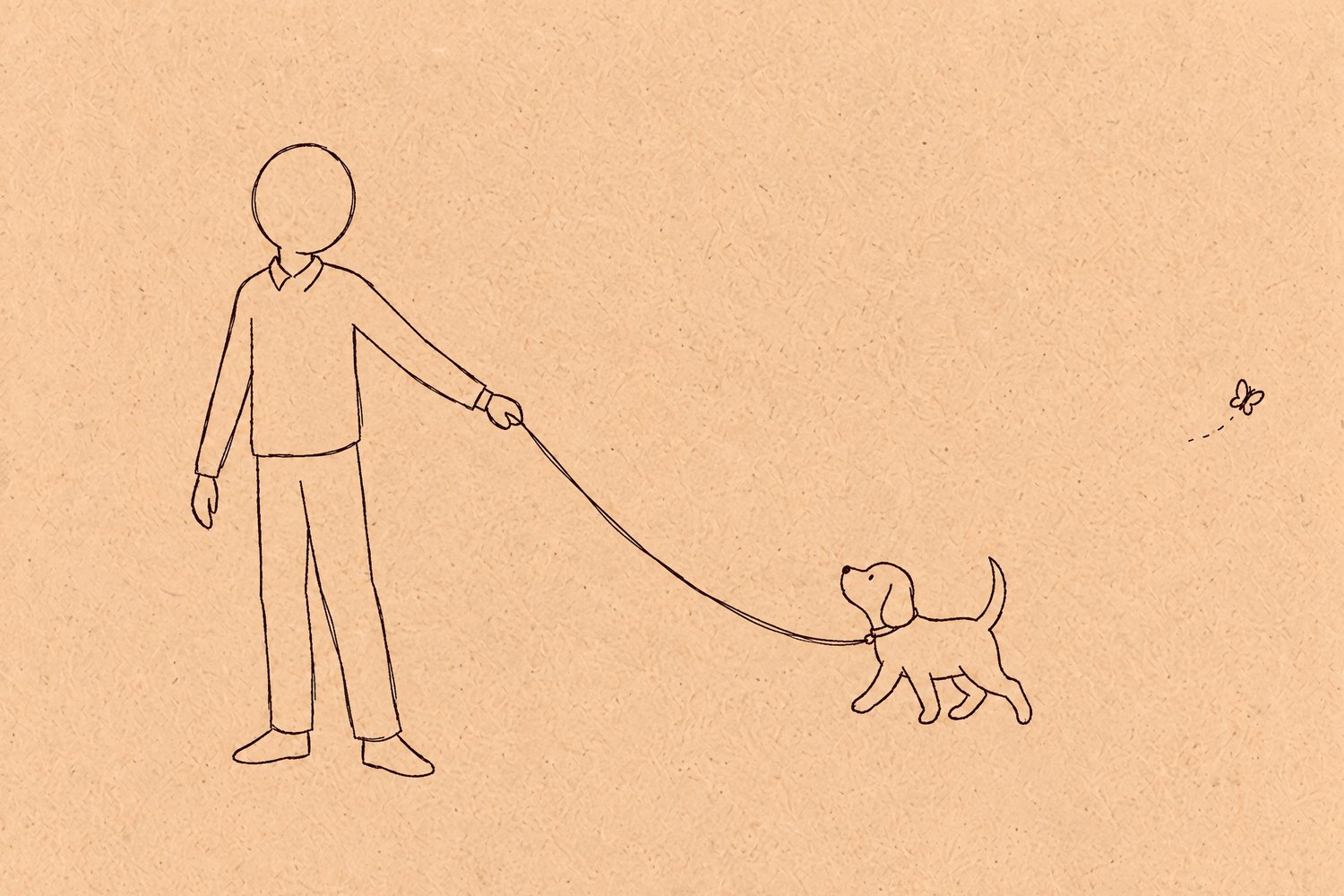
It's a bit like walking a puppy that bolts after a butterfly: you don't get angry, you just bring it back on the leash. It'll run off again. Each time, you bring it back.
As the practice adds up, your ability to notice grows, and the time you spend lost in thought can get shorter. That goes for the night before something big, and for the times your focus slips in class or at work. You can't stop the scenarios from showing up, but you can notice you're in one and come back.
When you're new to it, it's hard to catch your own wandering
When you're just starting out, it's common to realize you'd wandered only long after it happened. While you're lost in a thought, you can't tell you're lost. You practice to build the skill of noticing, but to notice in the middle of practice you'd already need that skill, so a lot of people get stuck early.
I meditate this way, and I built it into an app. You count silently, double-tap the screen, then take a breath. If your mind wanders and your tap rhythm breaks, the app gives a small vibration. Noticing and coming back is still up to you. There's also a sleep meditation mode that you keep going lying down, until you fall asleep.
In short
When you can't sleep the night before something important, you can try counting your breaths, and each time you notice your mind has wandered, come back to the number you were on. Nothing stops wandering thoughts from coming up, so the only answer is to notice as soon as you can. Noticing is a skill that grows through practice, not knowledge, and that practice is mindfulness meditation. The same skill is at work at night in bed and by day in class and at work.
True Meditation isn't an app you listen to. It's an app for doing mindfulness meditation yourself — practice in noticing your own thoughts, built into an app. It's free on the App Store and Google Play.