Mindfulness Meditation Isn't About Getting Rid of Thoughts
You close your eyes to meditate, and a minute later you're going over tomorrow's to-do list, or replaying a conversation from this afternoon. By the time you notice, several minutes are gone — and it's easy to conclude you're just not cut out for meditation.
When I started, the hardest part wasn't stopping my thoughts.
It was noticing that my mind had wandered.
"I am not my thoughts" — knowing it and feeling it are two different things
"I am not my thoughts" is an idea from Buddhism. It means that a thought showing up in your head isn't the same as it being true, or being who you are. Understanding that intellectually, I found, was very different from feeling it day to day.
When you're angry or worried, the thought feels like the truth. Does that person dislike me? What if I fail again? Once a thought like that shows up, you follow it, and the feeling grows as you go.
Mindfulness meditation gave me a way to practice relating to thoughts a little differently: noticing that a thought has come up, not getting carried along by it, and coming back to the present. Over time, I started to feel that I don't have to treat every thought as fact, or let a thought decide who I am.
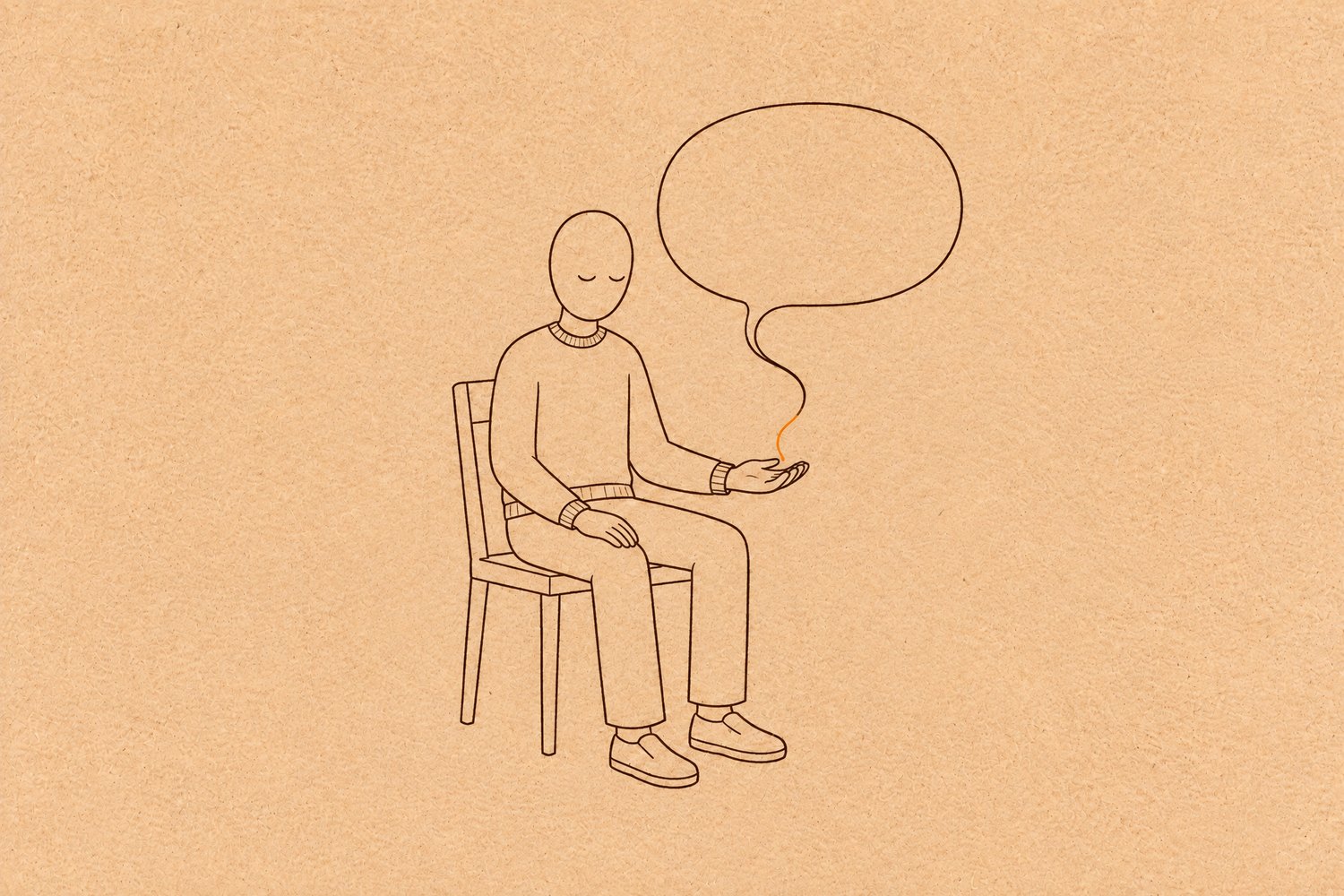
So what does that practice actually look like?
How do you do mindfulness meditation?
Mindfulness meditation is simple to start. Sit comfortably and pay attention to your breathing. When another thought comes up, notice it — I'm thinking right now — and bring your attention back to your breath. When the next thought comes, notice it and come back again.
You don't need a quiet room or a special cushion. Three to five minutes a day is a good place to start.
The point isn't to go a whole session without a single stray thought.
The moment you notice and come back — that's the practice.
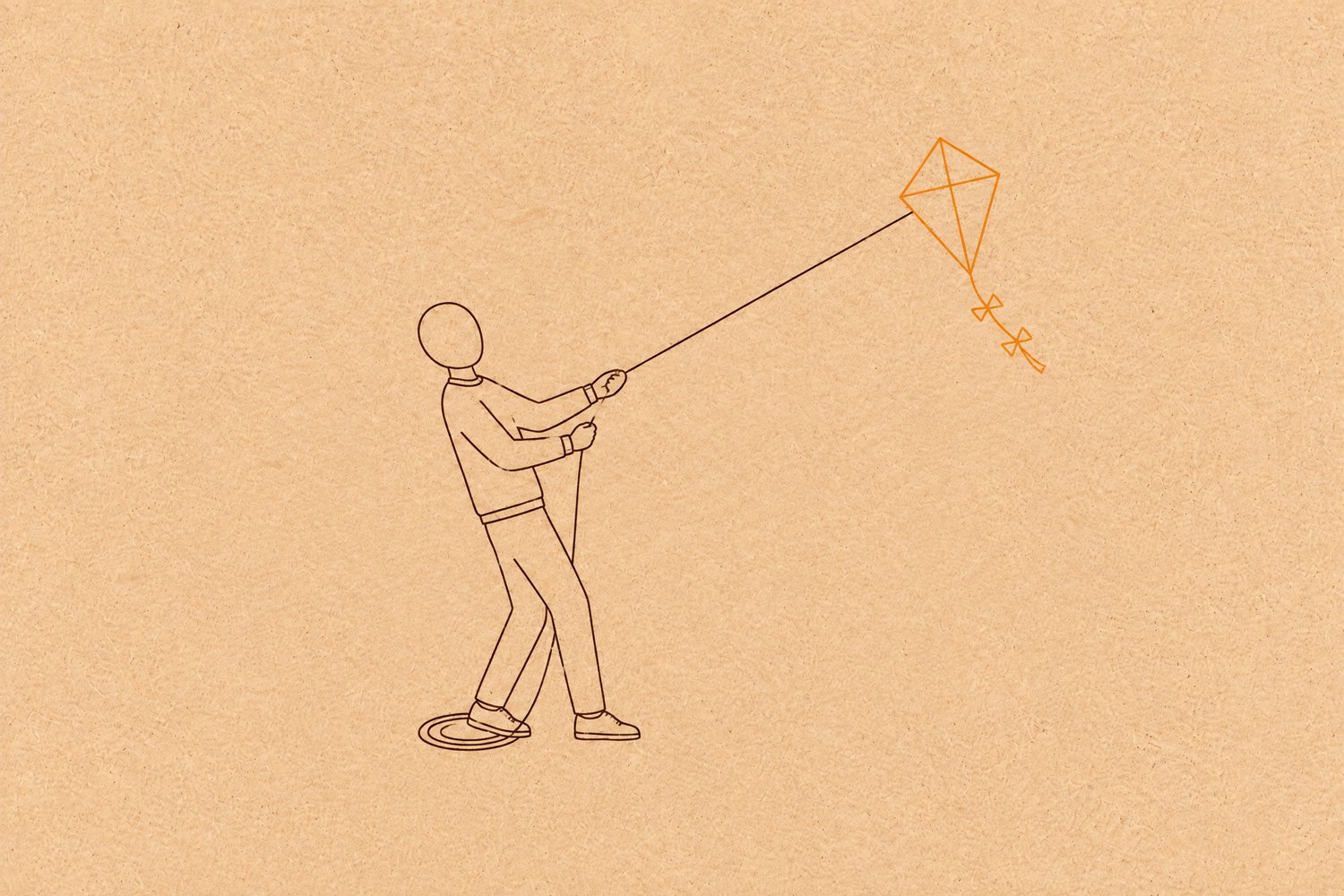
As I kept meditating, I began catching emotions before they took over
As I kept up with mindfulness meditation, I started having moments where jealousy, anger or fear came up and didn't take over right away. Lying in bed with one thought chasing the next, or worrying before something important, I could at least start by noticing: this is what I'm thinking right now.
Not everyone will experience the same changes, or at the same pace. For me, though, coming back again and again — even for a few minutes at a time — made a difference.
But there's one part of noticing and coming back that's harder than the rest.
Noticing that your mind has wandered is the hard part
Mindfulness meditation sounds easy when you hear how it works. Then you try it, and you might spend four minutes of a five-minute session lost in thought.
You have to notice before you can come back — and while you're lost in thought, you don't know you're lost.
I suspected this was exactly where a lot of people give up on meditation. So I started looking for a way to catch that moment sooner, and I built it into an app.
I built an app that buzzes when your mind wanders
If you want to meditate but worry your mind is too busy, try True Meditation, the app I made. With your eyes closed, you count one number in your head, tap the screen twice, then take one breath. You keep that rhythm going breath after breath, and when a wandering mind throws it off, your phone buzzes. Notice where your mind went, and come back to your breath.
You don't have to sit for long. Three to five minutes a day is enough to begin practicing coming back each time a thought pulls you away.
As you get more practice noticing when your mind has wandered, you spend less time lost in stray thoughts, your head feels less cluttered, and it gets easier to give your full attention to what you need to do.
In short
Mindfulness meditation isn't about getting rid of thoughts. It's the practice of noticing when your mind has wandered and bringing your attention back to your breath, and three to five minutes a day is enough to start.
Mindfulness meditation feels hard because, while you're caught up in a thought, you don't realize you're thinking. Having stray thoughts during meditation isn't failure; noticing them and coming back is the core of the practice.
True Meditation isn't an app you listen to. It's an app for doing mindfulness meditation yourself — practice in noticing your own thoughts, built into an app. It's free on the App Store and Google Play.
Related reading
- When Your Mind Won't Stop Racing, Emptying It Is the Wrong Move — the difference between emptying your mind and noticing
- How to Distance Yourself From Your Thoughts — and What It Actually Does — how to step back from your thoughts, and what the research found